

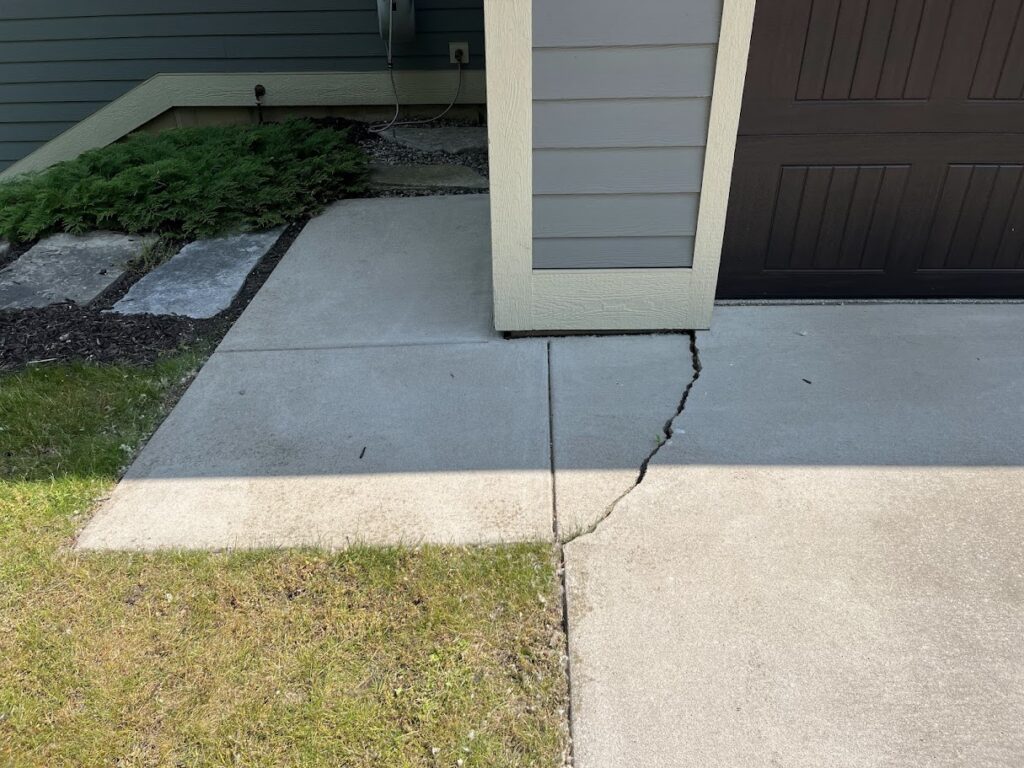
Nothing kills the joy of a brand-new driveway like spotting your first crack.
We get it. You spent good money on your concrete, and you’re proud of it. You want it to stay smooth and strong forever.
But the truth is… concrete cracks. All of it. Eventually.
The good news? Not all cracks are a big deal.
In fact, some are totally normal. The trick is knowing which ones to ignore and which ones you should worry about.
Why Does Concrete Crack in the First Place?
Concrete seems solid and indestructible, but when it’s fresh, it’s going through a lot.
It shrinks, dries, shifts, and settles. Here are a few reasons you might see cracks appear:
- Shrinkage while curing
As your slab cures and water evaporates, it shrinks. If joints weren’t placed correctly, they might crack randomly to release stress. - Temperature changes
Michigan summers and winters aren’t exactly easy on concrete. It expands when it’s hot and contracts when it’s cold, and cracks can form if it doesn’t have room to move. - Unprepared sub-base
If the ground underneath your slab wasn’t compacted well, it might settle later, dragging your concrete down with it. - Heavy loads too soon
Driving your SUV or letting that Amazon van roll over your new driveway too early? That’s a recipe for stress cracks. - Missing or misplaced joints
Control joints are those neat lines you see in sidewalks and driveways. They’re there on purpose, to give cracks a place to go. Without them, the slab will just… make its own.
When Should You Actually Worry?
Small, hairline cracks? Totally normal.
But some cracks are waving little red flags at you. Here’s how to tell the difference:
| Type of Crack | What It Means | What to Do |
| Thin, straight hairline crack | Cosmetic, from curing | No panic—just monitor |
| Wide or growing crack | Potential movement or settling | Get it inspected |
| Uneven surface or lifted corners | Possible tripping hazard | Needs leveling or repair |
| Web-like surface cracks (crazing) | Harmless, just surface tension | Ignore unless it worsens |
| Cracks near the house or joints | May point to drainage issues | Check downspouts and slope |
If you’re noticing cracks that seem to be growing, collecting water, or creating uneven spots—especially near your foundation—it’s time to call us.
Can Cracked Concrete Be Fixed?
Yes! In most cases, we can repair or at least stabilize cracked slabs.
Here’s what we recommend:
- Joint sealing for surface-level cracks
- Foam or mudjacking for settling slabs
- Full slab replacement in worst-case scenarios
Every crack has a backstory. And we’re pretty good at figuring out what happened and how to fix it.
How We Prevent Cracks (Before They Even Happen)
While no one can guarantee zero cracks, we follow ACI-certified installation practices to prevent most of them:
✔️ Control joints placed precisely
✔️ Solid sub-base compaction
✔️ Smart timing and mix design
✔️ Clear post-installation care instructions
✔️ Optional integral sealer mixed right in
We do concrete the right way from the start—because no one wants to pour it twice.
Frequently Asked Questions About Concrete Cracks
Q: Is it normal for new concrete to crack?
Yep! Especially in the first few weeks. Tiny hairline cracks are totally normal and expected.
Q: What kind of cracks should I be worried about?
If it’s more than 1/4″ wide, growing over time, or creating trip hazards, it should definitely be addressed.
Q: Can you fix a cracked driveway or patio?
We sure can. We’ve helped homeowners all over Grand Rapids, Kalamazoo, and Battle Creek with everything from sealants to slab lifting.
Q: Will sealing my concrete stop it from cracking?
Not completely, but sealing does help protect your slab from water, salt, and other things that speed up damage.
Q: When should I call in the pros?
If you’re unsure, call us. We’ll take a look and tell you honestly if it needs repair or is something you can keep an eye on.
Final Thoughts: It’s Just a Crack…Until It’s Not!
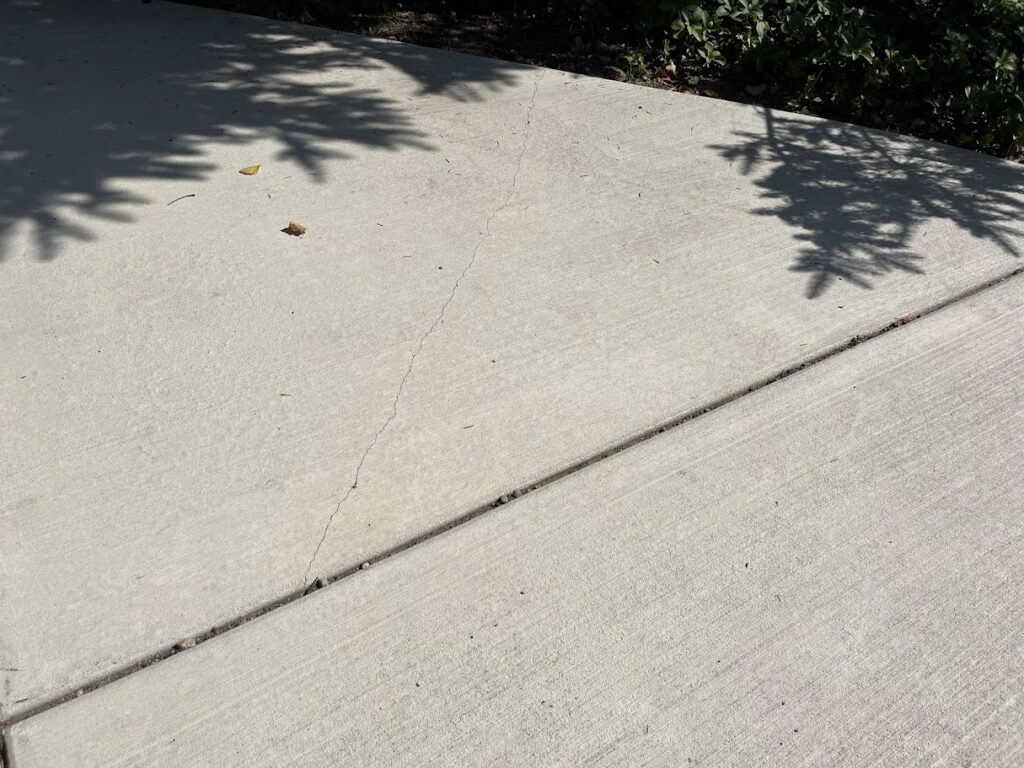
Concrete cracks. But not all cracks are a sign of failure.
If you’re noticing ones that are spreading, collecting water, or making you nervous, let’s talk.
We’ll take a look, give it to you straight, and fix it right if it needs fixing.
After all, your concrete is your driveway, your patio, your investment.
Let’s help it last.