

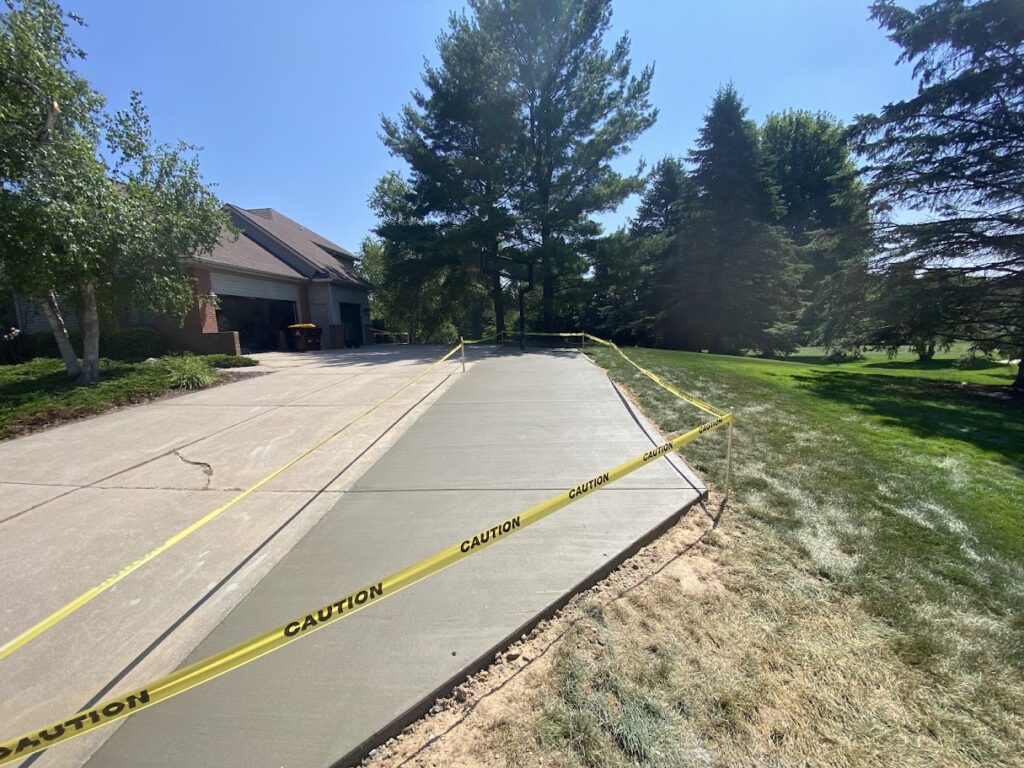
So you just got your new concrete installed. You’ve been dreaming about that new cement driveway, stamped decorative patio, or concrete porch for so long… And now, it’s finally here!
Now what?
Should you barricade it with caution tape for a month, spray it with water, or seal it right away?
Take a deep breath… I’ve got you! Here are the five most important things to do after your new concrete installation to keep it looking great and performing even better for years to come.
Step 1: Turn Off the Sprinklers
First things first. Don’t water your new concrete. It feels counterintuitive, but modern concrete mixes and finishing methods mean misting or hosing it down can actually do more harm than good.
New additives already handle moisture control, so leave the sprinklers off and let it cure on its own.
Step 2: Keep Off the Concrete
This one’s hard. You’re proud, and you want to show it off. But do your concrete a favor and stay off it for at least 48 hours.
- No walking. No foot traffic. No pets.
- No driving for 10 days.
- No heavy vehicles (like RVs or delivery vans) for 28 days.
Let the slab gain strength. It’ll thank you later.
Step 3: Fill In the Gaps
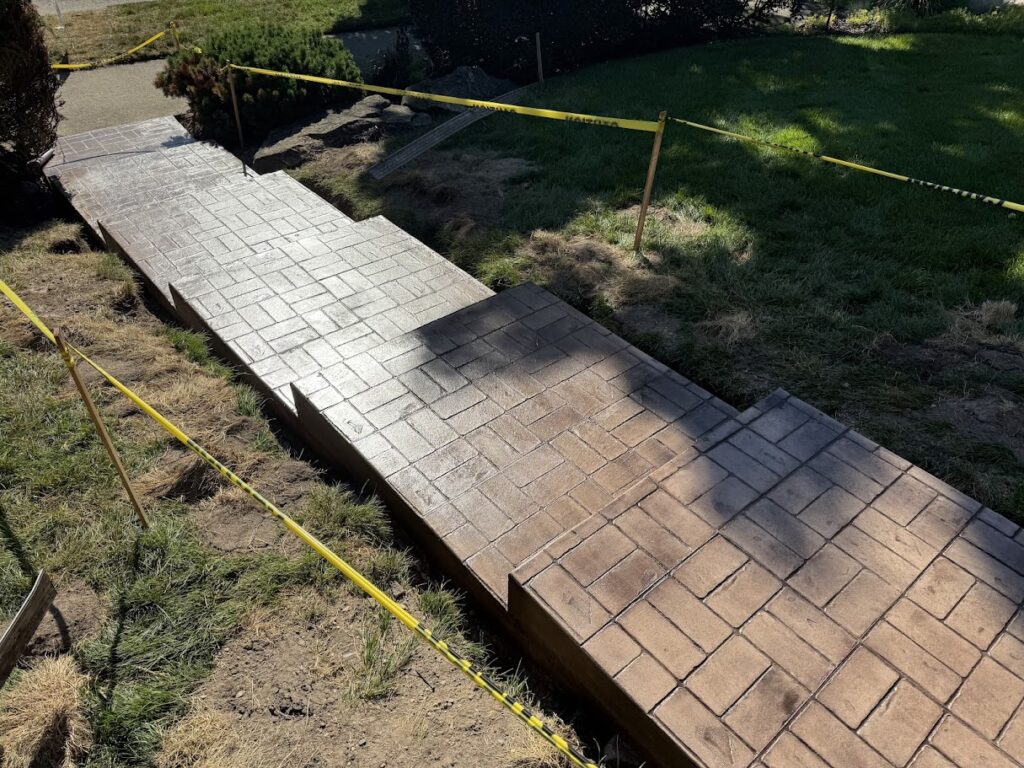
You know those edges where the wooden forms were? You’ll want to fill those in ASAP.
Add sand, topsoil, or landscaping material along the borders to prevent water from pooling under your slab. This will help with erosion and give your new concrete project a polished, finished look.
Step 4: Keep It Clean
Even if you seal it, organic gunk, such as leaves and mulch, can leave permanent stains. I’ve seen it happen.
Grab a broom or leaf blower and keep your slab clear, especially during fall. A quick sweep now can save you a headache later.
Step 5: Seal It
If your installer used an integral sealer (one mixed into the concrete), you’re in good shape. If not, don’t worry, you can still protect your slab with a high-quality concrete sealer.
Choose one that repels water and de-icers, and depending on weather and use, be ready to reapply every 1–3 years. Trust me, it’s worth it, especially for driveways.
FAQs About Caring for New Concrete
Q: When can I walk on it?
After 48 hours—but play it safe and keep the kiddos and dogs off until then.
Q: Is sealing really that important?
Yes. It protects against stains, moisture, cracks, and weather damage, especially in areas with snow and salt.
Q: What if it rains right after pouring?
If it’s already set, you’re probably fine. If it’s within the first few hours, call your installer for advice.
Final Thoughts
That shiny new slab? It deserves a little TLC.
These five steps aren’t complicated, but they’ll make a huge difference in how your concrete looks and lasts.
So go on, protect that investment. You’ve already done the hard part by pouring it.
Now let’s make it last.